
Not so long ago, most people chose a business based on a friend’s recommendation, a neighbour’s experience, or a family member’s story. Today, that “friend” is the internet. Before a customer calls, books, or buys, they quietly type your name into a search bar and see what the digital world has to say about you.
Your website might say one thing, your ads another—but your online reputation often tells the version people trust the most.
A single search can show your Google reviews, comments on social media, star ratings on directories, and even mentions in local groups or forums. In a matter of seconds, a potential customer forms an impression and answers a silent question: Can I trust this business?
That is why your online reputation is no longer a side issue or something to think about only after a crisis. It sits at the centre of your marketing, your sales, and your long-term growth. In this article, we’ll explore why your online reputation matters so much, how reviews shape decisions, and what you can do to manage, protect, and grow your digital trust. We’ll also share how Hyper Digital Agency can help you turn your reputation into a real competitive advantage.
The New First Impression: What People See Before They Meet You
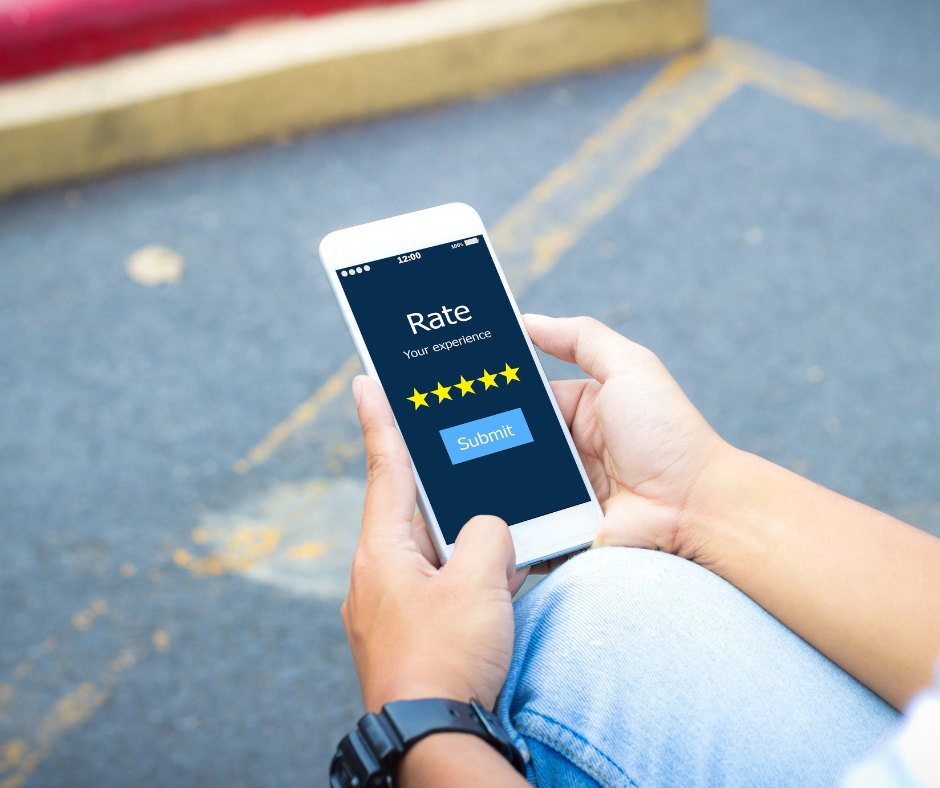
Think about the last time you looked up a business online. Perhaps you were searching for a restaurant, a clinic, a lawyer, a tradie, or even a digital agency. Chances are you didn’t simply click the first link and commit. You scanned the star rating, glanced at how many reviews there were, and read at least one or two recent comments.
If you saw warm, detailed reviews, with real stories and specific praise, you probably felt more comfortable moving forward. If you saw frustrated comments, unanswered complaints, or a long string of negative experiences, you may have closed the tab and started looking elsewhere—even if you never consciously said, “I’m rejecting this business.”
Your potential customers behave in exactly the same way. Long before they visit your website, request a quote, or talk to your team, they’re already forming a picture of your business based on what they read about you.
This means that your online reputation often shapes the opportunity before you even know that customer exists. A strong reputation can quietly push people in your direction; a neglected one can quietly push them away. Whether you are a small local business or an established brand, this unseen first impression can have a very visible impact on your bottom line.
Why Reviews Have Become So Powerful

Reviews have become one of the most influential forms of online content because they combine two things people rely on when making decisions: social proof and relatability.
Social proof is our tendency to look at the behaviour and opinions of others when we are uncertain. When we see that many people have had a positive experience with a business, it feels safer to make the same choice. Conversely, a pattern of negative experiences acts as a warning sign.
Relatability makes those voices feel personal. When someone with a similar problem or situation describes how a business helped them, their words carry weight in a way that a generic marketing claim often does not. A small business owner reading another owner’s praise of a marketing agency, a parent reading another parent’s experience at a clinic, a homeowner reading about another homeowner’s dealings with a roofer—these stories feel real.
Put together, these two forces make reviews extremely persuasive. A well-written, genuine review can do more to build trust than a polished brochure. At the same time, a cluster of unresolved complaints can undo the positive impression of even the most beautiful website.
But this power is not something you are helpless against. You cannot control every opinion, but you can shape the environment in which those opinions appear, respond thoughtfully, and actively encourage satisfied customers to share their experiences.
Reputation vs Perception: Closing the Gap

Many businesses feel a gap between the reality of their service and the way they are perceived online. They work hard, care deeply about their customers, and solve real problems—but when someone searches their name, that reality is not always reflected on the screen.
Perhaps there are only a handful of reviews, so the picture feels incomplete. Perhaps an unusually difficult period in the business produced a few harsh comments that now dominate the first page of feedback. Perhaps older reviews are positive, but nothing recent appears, leaving people to wonder whether the business is still active or consistent.
It helps to distinguish between two ideas:
- Your reputation is the collection of things that consistently show up about you online.
- The perception is the feeling people are left with when they see those things.
You might have an excellent reputation offline and a weak one online, or vice versa. The goal of reputation management is not to fake perfection, but to bring these two worlds closer together so that your digital presence reflects the genuine quality of what you offer.
At Hyper Digital Agency, we often meet clients who say, “Most of our customers are really happy—they just don’t leave reviews,” or “We had a rough patch and got a string of bad feedback, and now that’s what everyone sees.” These situations are common, and they are solvable. The key is to stop letting your reputation form on autopilot and start managing it with intention.
Where Your Online Reputation Lives

Your online reputation doesn’t live in a single location. It is spread across a network of platforms, some of which you control directly and others that you only influence indirectly.
Google Business Profile is often the most visible. When someone searches for your name or your service in your area, your profile, star rating, and customer feedback are likely to appear right alongside the search results or on Google Maps. For many people, this is their primary source of information.
Industry-specific directories also play a major role. Lawyers, doctors, trades, hospitality, real estate, and professional services often have their own listing platforms where people browse ratings and read comments before making contact. Social media pages add another layer, allowing people to recommend, comment, or share their experiences publicly. Community groups and forums can also shape your reputation without you even being directly involved.
Then there are your own assets: testimonials on your website, case studies, social proof woven into your content, and any stories you share through email or social channels. All of these contribute to the overall impression.
An effective reputation strategy recognises that potential customers may encounter you through any of these pathways. Rather than trying to control everything, you focus on the key platforms that matter most in your industry and region, and make sure that what appears there is current, accurate, and aligned with who you really are.
Encouraging Happy Customers to Share Their Experience

In most businesses, there is a silent majority of happy customers who never get around to leaving a review. They move on with their lives, satisfied, but their story never gets told. Meanwhile, the few who are disappointed, frustrated, or simply having a bad day are often more motivated to vent publicly.
Left unmanaged, this natural imbalance can distort your online reputation. The good news is that you can gently and ethically shift this balance by actively inviting your satisfied customers to speak up.
This does not mean pressuring people or offering questionable incentives. It means building small but consistent habits into your customer journey. For example, shortly after you deliver a service, you can send a brief thank-you message and include a direct link to leave a review. You can train your team to recognise moments when clients express gratitude and to say, “We’d really appreciate it if you’d share that experience online—here’s how.” You can include polite review requests in follow-up emails, newsletters, or aftercare documents.
When review generation becomes part of your regular process rather than an occasional afterthought, your online profile starts to look more like your real-world performance. Over time, a steady stream of honest, positive reviews builds a strong foundation of trust.
Hyper Digital Agency helps businesses design simple, sustainable systems for inviting feedback. The aim is to make it easy for people to share their story at the moment when they are genuinely most appreciative, without feeling pushed or uncomfortable.
Responding to Reviews: Showing That You Listen

Reviews are not just scores on a screen; they are the beginning of a dialogue. When someone takes the time to write about their experience—whether it is glowing praise or sharp criticism—they are offering you a chance to respond, to deepen the relationship, and to show the wider public how you behave when dealing with real people.
Responding to positive reviews may seem optional, but it makes a noticeable difference. A simple “thank you” that acknowledges something specific in the review shows that you are paying attention. It turns a one-sided statement into a two-way interaction and reinforces the customer’s sense that they made the right choice.
Even if the particular reviewer never responds, your reply remains visible to future potential customers. They will see not only the complaint but also your effort to address it. In many cases, a well-handled negative review can do more to build trust than a long list of generic compliments, because it proves that you are willing to own problems and try to make things right.
At Hyper Digital Agency, we often work with clients to develop a tone and approach for review responses so that the voice of the business remains consistent—professional, warm, clear, and human—across all interactions.
What to Do When a Review Feels Unfair

Every business, at some point, will face a review that feels unfair, exaggerated, or simply untrue. It might come from a misunderstanding, miscommunication, or a person whose expectations were unrealistic. In some cases, it may even come from someone who never actually became a paying customer.
In these moments, it is tempting to lash out, to argue, or to write long explanations defending yourself. But how you respond publicly can have more impact than the review itself.
A constructive approach begins with composure. You acknowledge that the person feels disappointed or upset, even if you disagree with their version of events. You briefly and calmly share your perspective or clarify any important points, without descending into blame or personal attacks. You then invite them to contact you privately so you can continue the conversation in more detail.
There are also times when a review crosses a line—perhaps it involves abusive language, hate speech, or is clearly unrelated to your business. In these cases, most platforms offer a process for flagging and requesting moderation. While removal is not guaranteed, you are not obliged to tolerate content that violates platform policies.
The goal is not to eliminate all negativity—no real business can—but to show that you are responsible and professional in your behaviour. When people see that you respond with fairness and maturity, they are often more forgiving of the occasional unhappy customer.
Beyond the Stars: Building Broader Digital Trust

Star ratings and written reviews are a central piece of online reputation, but they are not the whole story. Digital trust is built from many small signals that people absorb, often subconsciously, as they move between your website, your social media, your listings, and any other content that carries your name.
Trust grows when your information is consistent and accurate. Your business name, contact details, opening hours, and services should line up wherever a person encounters them. If one site lists one phone number and another shows a different one, doubt creeps in.
Trust grows when your brand feels human and transparent. When people can see real team members, understand your story, and get a sense of your values, they feel reassured. A website filled with lifeless stock photos and generic statements creates distance; one that shows real faces and real work feels more authentic.
Trust also grows when you regularly share useful, straightforward content instead of only promotional material. Articles, videos, FAQs, and social posts that genuinely help people—even before they become customers—signal that you are knowledgeable and generous with your expertise.
Reputation management, in this broader sense, is about aligning all of these elements. At Hyper Digital Agency, we often combine review strategies with website updates, content marketing, and social media planning, so that everything works together to tell a coherent story: this is who we are, this is how we treat people, and this is why you can feel safe choosing us.
When Reputation and Marketing Work Together

It’s a mistake to treat online reputation and marketing as separate projects. They constantly interact.
Imagine running paid advertising campaigns to drive people to your website. Your ads might be beautifully designed and strategically targeted, but before some people click, they will open a new tab and search your name. If they are greeted by a strong profile of positive reviews and thoughtful responses, your ads suddenly become far more persuasive. If they see confusion, complaints, or neglect, your ads have to work much harder to overcome that doubt.
The same is true for your organic visibility. When you appear in search results, your star rating often shows up right alongside your name. A high rating with many reviews can draw more clicks than a competitor who sits above you but has weaker or fewer reviews.
On social media, comments and messages are part of your live reputation. How you reply—quickly or slowly, with care or indifference—shapes how people perceive your brand. Testimonials, case studies, and success stories become powerful content that can be reused in many places: your website, email campaigns, sales presentations, and more.
The businesses that flourish are those that see these elements as interconnected. Every effort to strengthen your online reputation also strengthens your marketing, and every good marketing campaign provides new opportunities to collect positive feedback.
How Hyper Digital Agency Supports Your Online Reputation

Many business owners recognise the importance of their online reputation, but simply do not have the time, structure, or headspace to manage it consistently. It becomes something they think about only when a crisis hits or when a particularly harsh review appears.
Hyper Digital Agency exists to make this easier, more strategic, and more sustainable.
We begin by taking a clear, honest look at where you stand now. We review your presence on Google, key directories, and social platforms. We note patterns in your feedback, identify strengths you can build on, and highlight areas of risk or confusion.
From there, we work with you to define the kind of reputation you want to build. How do you want to sound when you respond to feedback? What values and strengths do you want your customers to see? What kind of stories and testimonials best represent your work?
We then help you set up practical systems: templates for responses, processes for inviting reviews, ways to monitor new feedback without feeling overwhelmed, and strategies for addressing negative comments in a calm and constructive way. In many cases, we also help weave your best reviews into your website, your social content, and your broader marketing activity.
Throughout, our aim is not to “polish” a fake image, but to help your online presence accurately reflect the care, effort, and results you are already creating for your customers.
Your Reputation Is Already Talking. Are You?

Whether you actively manage it or not, your online reputation is speaking for you every day. People are searching, reading, and making quiet decisions about whether or not to trust you. The question is not whether your reputation matters—it’s whether you are part of that conversation.
If you feel that the story being told about your business online is incomplete, outdated, or simply not good enough, now is the right time to change it. You do not have to do everything at once. Small, consistent steps—inviting reviews, responding thoughtfully, aligning your information, sharing real stories—can have a profound impact over time.
Hyper Digital Agency is here to walk that journey with you. We can help you understand where you are, clarify where you want to go, and build a practical, human-centred approach to managing your reputation and building digital trust.
If you’d like to explore how we can support your business:
Contact hyperdigitalagency.com at +1 909-242-8830 to learn more about our services or schedule a consultation.