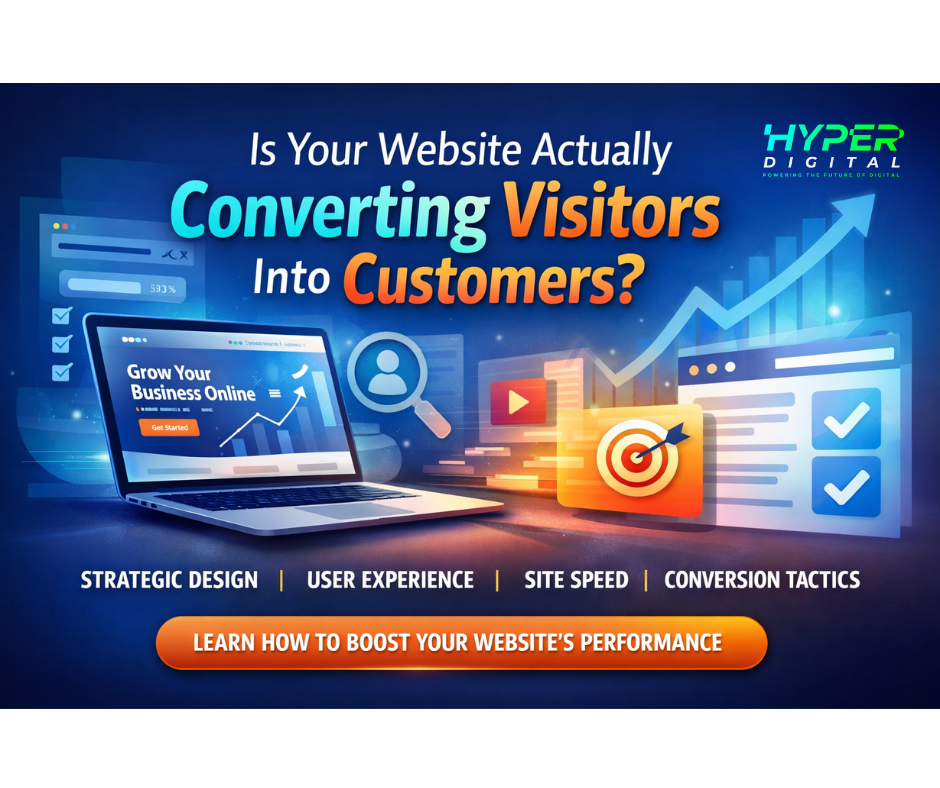
A business website is no longer just a digital placeholder. It is often the first meaningful interaction a potential client has with your brand, and that interaction shapes trust, credibility, and decision-making. In a competitive online environment, a website must do more than look good. It must guide visitors, communicate value clearly, and encourage action.
A high-performing website is designed with conversion in mind. Every design choice, content section, and user interaction is intentional. Instead of simply showcasing information, the website works as an active business tool—supporting marketing efforts, generating leads, and contributing directly to growth.
What Does “Website Design That Converts” Mean?
Website design that converts focuses on outcomes. A conversion can mean different things depending on the business, such as booking a consultation, submitting an inquiry, or making a purchase. What matters is that the website leads visitors toward a clear and meaningful next step.
A converting website removes uncertainty. It anticipates what users are looking for, answers questions before they are asked, and minimizes friction throughout the experience. Rather than overwhelming visitors with unnecessary elements, it presents information in a structured and reassuring way that builds confidence.
Strategy Is the Foundation of Every High-Performing Website
Design without strategy often results in a website that looks appealing but fails to perform. A strong website begins with clarity about who it is for and what it is meant to achieve.
Understanding the target audience allows the website to communicate directly and effectively. When visitors feel that a website understands their needs and challenges, engagement naturally increases. At the same time, clearly defined goals ensure that every page and section supports a specific business outcome rather than distracting from it.
Without this strategic foundation, design decisions become guesswork, and conversions suffer.
First Impressions and Above-the-Fold Content
Visitors make judgments about a website almost instantly. The content and layout they see before scrolling play a major role in whether they stay or leave.
A strong headline clearly explains what the business does and who it helps. Supporting text reinforces this message by highlighting the value or benefit for the visitor. When this information is immediately clear, hesitation is reduced and engagement increases.
Visual hierarchy is equally important. A well-structured layout naturally guides the visitor’s attention from key messages to calls to action, making the experience feel intuitive rather than forced.
User Experience as a Key Conversion Factor
User experience directly affects whether visitors take action. A website that is difficult to navigate or confusing to use will lose conversions regardless of how strong the offer is.
Navigation should feel simple and predictable. Visitors should be able to move through the site without effort, finding information quickly and easily. Consistency across pages helps users feel comfortable and in control, which builds trust.
Mobile responsiveness is also essential. A high-performing website adapts seamlessly across devices, ensuring that text remains readable, buttons are easy to tap, and content flows smoothly on smaller screens. Ignoring mobile users means ignoring a large portion of potential clients.
Website Speed and Technical Performance
Website performance is often overlooked, yet it has a direct impact on conversions. Slow-loading pages create frustration and damage credibility. Users expect websites to load quickly, and when they do not, visitors are more likely to leave before engaging.
High-performing websites prioritize speed and stability. This includes optimized images, efficient code, and reliable hosting. When a website performs well, it not only improves user experience but also supports search engine visibility and long-term scalability.
Content That Supports Conversion
Content plays a critical role in guiding visitors toward action. High-performing websites focus on clarity rather than complexity, using language that is easy to understand and centered on benefits rather than features.
Instead of simply listing services, effective content explains how those services help solve specific problems or achieve desired outcomes. This approach allows visitors to see the value of the offering in a practical and relatable way.
Well-written content also improves engagement by flowing naturally, using clear subheadings and spacing to make information easy to absorb without overwhelming the reader.
Building Trust Through Design and Messaging
Trust is essential for conversions, especially for service-based businesses. A website must consistently reassure visitors that they are making the right choice.
High-performing websites include subtle but effective trust signals, such as client feedback, professional presentation, and consistent branding. These elements work together to reduce doubt and increase confidence.
Trust is also built through transparency. Clear explanations of services, processes, and expectations help visitors feel informed and comfortable moving forward.
Calls to Action That Feel Natural, Not Pushy
A converting website guides visitors rather than pressures them. Calls to action are placed strategically throughout the site, appearing when users are most ready to take the next step.
Effective calls to action are clear, specific, and aligned with the visitor’s intent. They are supported by simple forms and straightforward instructions that reduce friction and make the conversion process feel easy and reassuring.
When users understand what will happen after they click or submit, they are more likely to follow through.
SEO and Conversion-Focused Design Working Together
A high-performing website balances visibility with usability. Search engine optimization helps attract qualified traffic, while conversion-focused design ensures that traffic leads to results.
Well-structured pages, fast load times, and mobile-friendly layouts benefit both search rankings and user experience. Content that addresses real user questions attracts visitors who are already looking for solutions, increasing the likelihood of conversion.
When SEO and design are aligned, the website becomes a long-term growth asset rather than just a digital presence.
Continuous Improvement Through Data
A website should evolve based on real user behavior. Analytics provide valuable insights into how visitors interact with the site, which pages perform best, and where users drop off.
High-performing websites are continuously refined. Even small improvements in messaging, layout, or navigation can lead to meaningful increases in conversion rates over time.
Why Conversion-Focused Website Design Is an Investment
A website that converts works for your business around the clock. It supports marketing campaigns, improves lead quality, and strengthens brand perception without requiring constant manual effort.
Rather than being a one-time expense, a well-designed website delivers long-term value by consistently turning visitors into opportunities.
How Hyper Digital Agency Designs Websites That Convert
Hyper Digital Agency approaches website design as a strategic business tool. Every project is built with a clear understanding of the client’s audience, goals, and long-term growth plans.
By combining thoughtful design, strong content, technical performance, and user-focused strategy, Hyper Digital Agency creates websites that not only look professional but actively contribute to measurable results.
Final Thoughts
A website that converts is built with purpose. It communicates clearly, builds trust, and guides visitors toward action without friction. In an increasingly competitive digital space, a high-performing website can be the difference between missed opportunities and consistent business growth.
If your website is not delivering the results you expect, focusing on how it functions—not just how it looks—may be the key to unlocking its full potential.